Talk
The Parliament of Bodies — Documenta 14, 2017
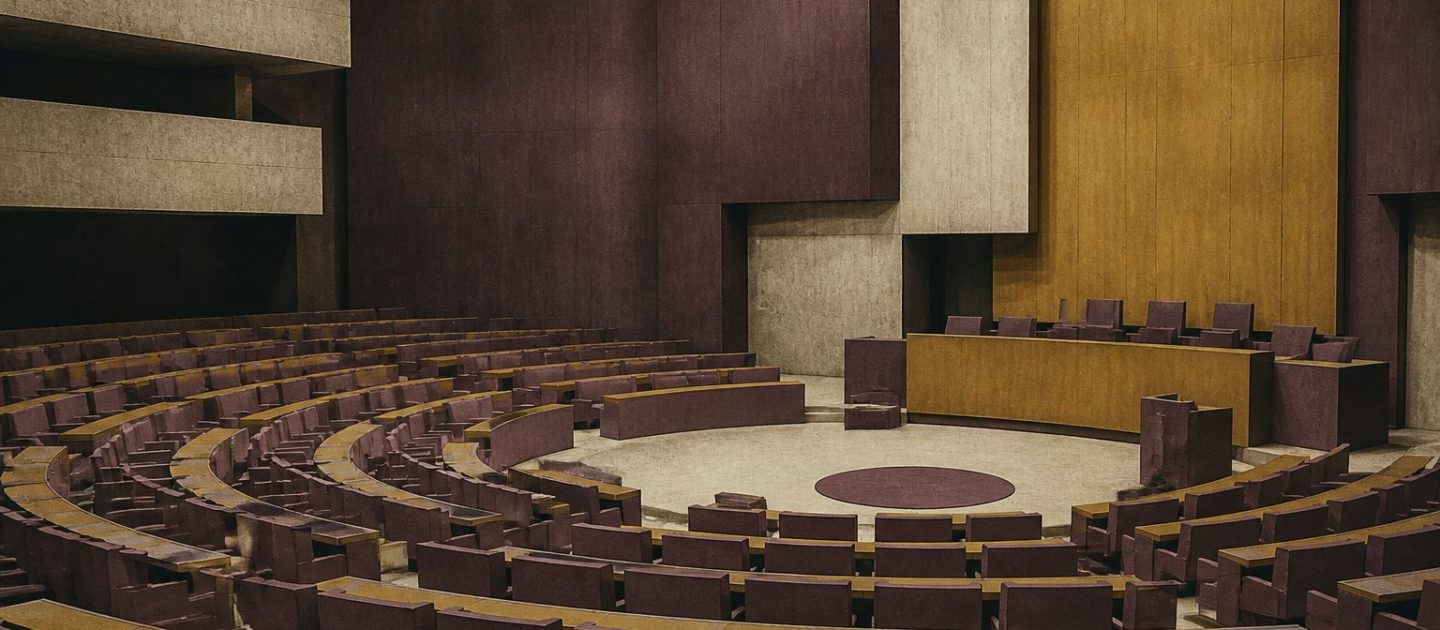
April–September 2017 · Athens and Kassel
Speakers: Paul B. Preciado, Adam Szymczyk, Angela Davis (opening address)
Documenta 14, split between Athens and Kassel under the artistic direction of Adam Szymczyk, was structured around the premise of learning from Athens — a phrase that attracted both admiration and fierce critique. Within this broader framework, Paul B. Preciado curated the Parliament of Bodies, a public program that became one of the most intellectually ambitious components of the entire exhibition.
The Parliament convened over several months in both cities, hosting lectures, performances, reading groups, and assemblies that addressed the intersections of crisis, democracy, displacement, and embodied politics. Angela Davis delivered the opening address in Kassel, connecting the struggles of incarcerated populations in the United States with the displacement of refugees crossing the Mediterranean — drawing a line between carceral geography and the politics of mobility that would recur throughout the program.
Preciado’s curatorial framework drew on his theoretical work on the body as a political technology. The Parliament was not merely a discussion forum but an attempt to construct a counter-institution: a space where bodies that are typically excluded from parliamentary representation — queer bodies, disabled bodies, incarcerated bodies, migrant bodies — could speak and be heard on their own terms. This meant that the program often departed from conventional lecture formats, incorporating somatic workshops, collective reading sessions, and what Preciado termed “performative assemblies.”
The Athens iteration was particularly charged, given the city’s position as a symbol of European austerity politics. Speakers addressed the ways in which the Greek crisis had been aestheticized by international media, turning genuine suffering into a spectacle of European failure. The tension between Documenta’s institutional resources and the material conditions of the city it claimed to learn from was never fully resolved — and many participants argued it should not be.
The Parliament of Bodies remains significant as an experiment in institutional form: an attempt to use the scale and visibility of a major art exhibition to create a genuinely political assembly, rather than merely representing political themes through artwork.