Essay
The Distribution of the Sensible: Why Rancière Still Matters for Political Art
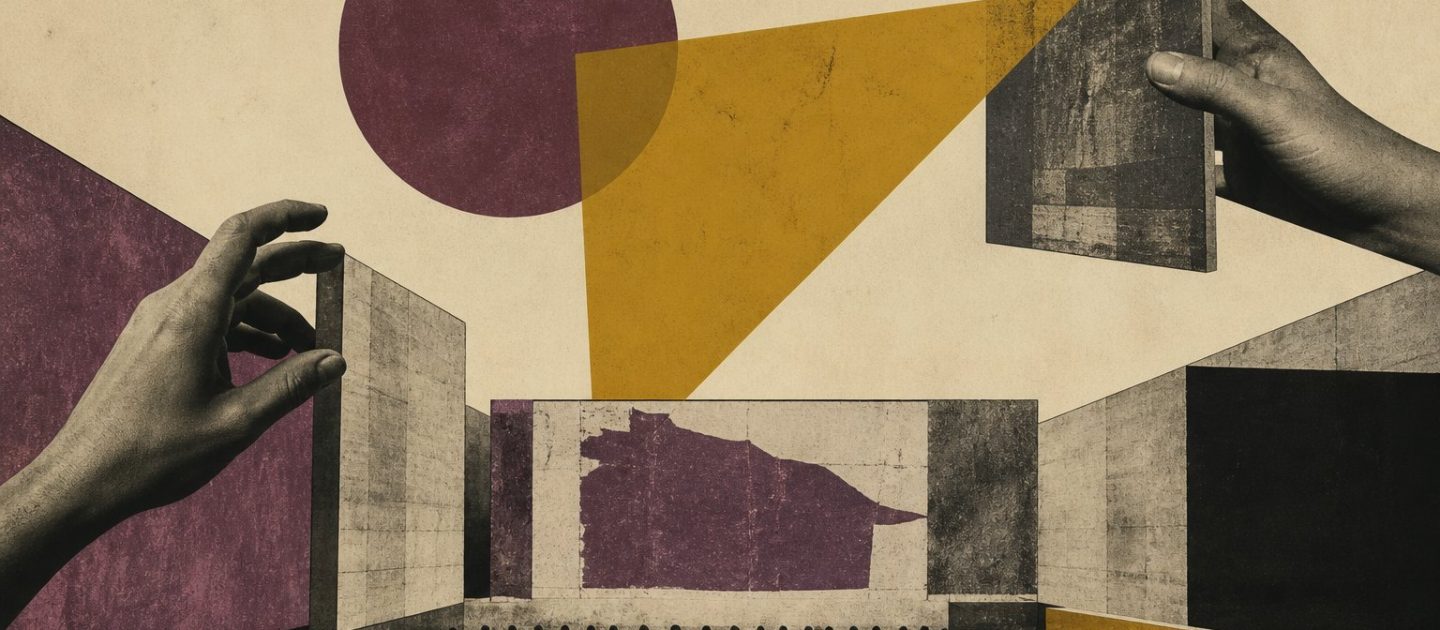
In the landscape of contemporary art theory, few conceptual frameworks have proven as durable or as generative as Jacques Rancière’s notion of the “distribution of the sensible” (le partage du sensible). First elaborated in his 2000 text of the same name and subsequently refined across a body of work that includes The Politics of Aesthetics, The Emancipated Spectator, and Dissensus, the concept proposes that politics and aesthetics share a common root: both are concerned with what is made visible, audible, and thinkable within a given social order. More than two decades after its initial formulation, the distribution of the sensible continues to shape how artists, curators, and critics understand the political capacity of art — not as a vehicle for messages, but as a reconfiguration of perceptual experience itself.
The Partition of Experience
Rancière’s framework begins with a deceptively simple observation: every social order rests on an implicit arrangement of what can be seen, said, and done, and by whom. This arrangement — the distribution of the sensible — determines which bodies occupy which spaces, which voices are heard as speech and which as noise, which activities count as meaningful and which as mere subsistence. Politics, in Rancière’s account, is not primarily a matter of competing interests or institutional procedures. It is, more fundamentally, a disruption of the prevailing sensory order: a moment in which those who have “no part” — those rendered invisible or inaudible by the existing distribution — assert their presence and their capacity for speech.
What makes this framework so productive for thinking about art is Rancière’s insistence that aesthetics — understood not as a philosophy of beauty but as a regime governing what is perceptible — operates according to the same logic. The “aesthetic regime of art,” which Rancière traces to the late eighteenth century and the collapse of the classical hierarchy of genres, is characterised by a fundamental indeterminacy: art is that which suspends the ordinary coordinates of sensory experience, creating what he calls a “dissensus” — a gap between the established order of things and a newly disclosed possibility.
Against Instrumentalism
One of the most consequential implications of Rancière’s thought is its challenge to instrumentalist accounts of political art. From agitprop to activist graphics, from Brechtian theatre to contemporary social practice, a persistent tradition holds that art becomes political by delivering a message, raising consciousness, or mobilising its audience toward a predefined end. Rancière is deeply sceptical of this model. In The Emancipated Spectator, he argues that such approaches typically rest on a “stultifying” logic: they presume a gap between the artist who knows and the spectator who does not, and they seek to bridge that gap through the transmission of knowledge or affect. The result, paradoxically, is the reproduction of the very hierarchy — the very distribution of the sensible — that political art ostensibly seeks to disrupt.
This critique has been enormously influential, and also enormously contentious. For many practitioners of socially engaged art, Rancière’s position can seem like an aesthete’s alibi — a way of preserving the autonomy of art at the expense of its capacity for real-world intervention. The objection is not without force. But Rancière’s point is more subtle than a simple defence of aesthetic autonomy. What he proposes is not that art should withdraw from politics but that the political efficacy of art lies precisely in its capacity to reconfigure the sensible — to make visible what was invisible, to render audible what was noise, to disclose new modes of experience that cannot be assimilated to the existing order. Art is political not when it illustrates a thesis but when it produces a dissensus: a fissure in the consensus that governs perception.
Contemporary Resonances
The enduring relevance of Rancière’s framework is perhaps most visible in the way it has shaped curatorial and critical discourse around contemporary art. The proliferation of biennials, exhibitions, and publications devoted to the relationship between art and politics over the past two decades — from the 2012 gathering in Graz that explored strategies and tactics for art and political engagement, to the documenta exhibitions of 2012 and 2017, to the ongoing programming of institutions like the Van Abbemuseum and the Haus der Kulturen der Welt — has consistently drawn on Rancièrean language and concepts, even when the specific practices on display diverge from or complicate his theoretical commitments.
Consider, for instance, the recent surge of interest in “forensic aesthetics” — the work of Forensic Architecture and allied practices that use spatial analysis, digital modelling, and open-source intelligence to investigate state violence and environmental destruction. On one reading, this work is straightforwardly instrumentalist: it produces evidence, it names perpetrators, it intervenes in legal and political processes. But it can also be understood in Rancièrean terms as a redistribution of the sensible: a practice that makes visible what states and corporations have rendered invisible, that transforms raw data into perceptible form, that reconfigures the field of what can be seen and known. The political force of Forensic Architecture’s work lies not only in its evidentiary function but in its capacity to disclose — to make sensible — realities that the prevailing order has consigned to imperceptibility.
Similarly, the work of artists like Hito Steyerl, whose investigations of image circulation, digital labour, and the politics of visibility have made her one of the most discussed figures in contemporary art, can be productively read through Rancière’s lens. Steyerl’s concept of the “poor image” — the degraded, low-resolution image that circulates freely online, accumulating meaning through its very dispossession — resonates with Rancière’s interest in the ways that aesthetic regimes determine which images count and which do not. When Steyerl asks what happens to images when they leave the gallery and enter the network, she is, in effect, asking a question about the distribution of the sensible in the age of digital capitalism.
Limits and Extensions
None of this is to suggest that Rancière’s framework is without limitations. Several significant criticisms have been advanced. The philosopher’s relative inattention to questions of race and colonial difference has been noted by scholars including Ariella Aïsha Azoulay and Fred Moten, who have argued that Rancière’s account of the “part of those who have no part” insufficiently reckons with the specific forms of dispossession and dehumanisation that structure anti-Black and colonial regimes of visibility. The concept of dissensus, powerful as it is, can also tend toward a certain abstraction: it tells us that political art disrupts the sensory order, but it says relatively little about the specific mechanisms, materials, and social relations through which such disruptions are produced and sustained.
Moreover, the rapid transformation of the media landscape since Rancière’s key texts were written — the rise of social media, algorithmic curation, deepfakes, and the attention economy — poses new challenges for any theory premised on the politics of visibility. In a world where images proliferate beyond measure and attention is the scarce resource, the question is no longer simply what is made visible but how visibility is structured, captured, and monetised. Artists and theorists working at the intersection of art and technology — from Trevor Paglen’s investigations of machine vision to Kate Crawford’s analyses of AI’s extractive infrastructure — are extending and complicating Rancière’s framework in ways that he himself has not fully addressed.
Why It Still Matters
Despite these limitations, Rancière’s contribution remains indispensable for at least two reasons. First, by insisting that the relationship between art and politics is not one of application or illustration but of shared structure — both are concerned with the partition of the perceptible — he provides a way of thinking about political art that neither reduces it to propaganda nor consigns it to irrelevance. This is no small achievement in a moment when the demand that art “do something” coexists uneasily with a sophisticated awareness of the co-optation of activist aesthetics by institutions and markets.
Second, the concept of the distribution of the sensible offers a genuinely materialist account of aesthetic experience — one that grounds the politics of art not in the intentions of artists or the interpretations of critics but in the sensory fabric of collective life. In an era of profound perceptual transformation — when the conditions of visibility, audibility, and attention are being reshaped by technological, economic, and ecological forces — this insistence on the materiality of perception is more urgent than ever. Rancière may not have the last word on art and politics. But he has, perhaps, the most necessary first word: that the question of what can be seen, heard, and thought is never merely aesthetic. It is always, already, political.