Artist
Oliver Ressler
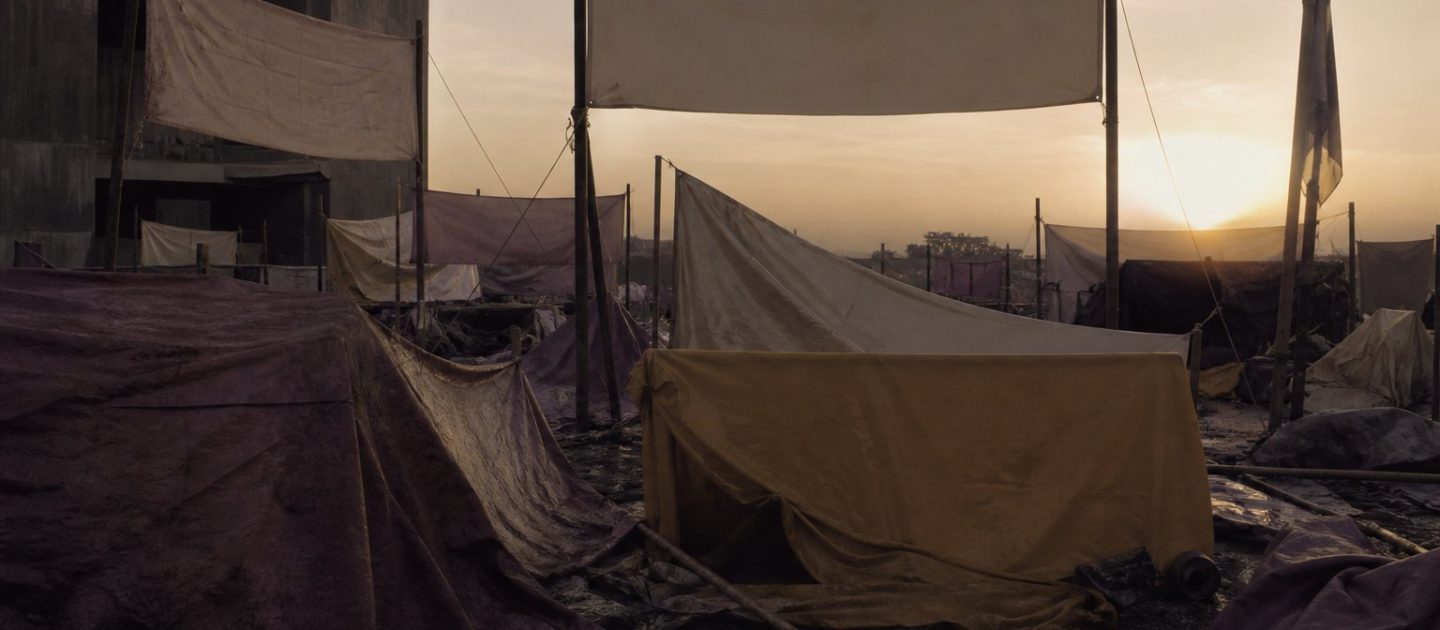
Austrian artist and filmmaker whose practice interrogates the structural conditions of global capitalism, climate crisis, and the possibilities of collective resistance through documentary film, installation, and public intervention.
Biographical Overview
Oliver Ressler (b. 1970, Knittelfeld, Austria) has worked since the mid-1990s at the intersection of art, activism, and political economy. Based in Vienna, his practice spans film, installation, photography, and public-space projects that examine the contradictions of democratic governance, the extractive logic of fossil capitalism, and the organizational forms through which social movements challenge prevailing economic orthodoxies.
His ongoing film series Everything’s Coming Together While Everything’s Falling Apart (2016–present) documents climate justice movements across multiple continents, from the Ende Gelände blockades in Germany’s Rhineland lignite mines to direct actions against pipeline infrastructure in North America. The series refuses conventional documentary narration in favor of an immersive, first-person proximity to collective action — the camera positioned not as observer but as participant.
Earlier bodies of work include Alternative Economics, Alternative Societies (2003–2008), a multi-part installation examining cooperative models, gift economies, and participatory budgeting; and What Is Democracy? (2007), a film composed of interviews conducted in eighteen cities across the globe. Ressler’s installations have been exhibited at venues including the Museo Reina Sofía, Lentos Kunstmuseum, Wyspa Institute of Art, and the Secession in Vienna. He has participated in the São Paulo Biennial (2011), the Taipei Biennial (2008), and Documenta 14 (2017) in Athens and Kassel.
Relevance to Political Art and Activism
Ressler’s significance lies in his refusal to treat politics as subject matter to be aestheticized. His projects function simultaneously as artworks and as tools of political education — distributing analysis, platforming movement voices, and circulating counter-narratives through exhibition contexts that reach audiences beyond activist circles. The work insists that the climate crisis is not a technical problem awaiting managerial solutions but a political crisis demanding systemic transformation.
His collaborative methodology — working with social movements, economists, political theorists, and affected communities — positions the artist not as auteur but as facilitator of collective speech. This approach aligns with a broader tendency in contemporary art that regards the distribution of aesthetic competence as itself a political act, recalling Jacques Rancière’s formulation of politics as a redistribution of the sensible.
Biographical details compiled from publicly available exhibition records, artist statements, and published interviews. References to critical frameworks draw on widely cited scholarship in political aesthetics.